
Wholesale Toy Receiving: Count, Check and List Stock
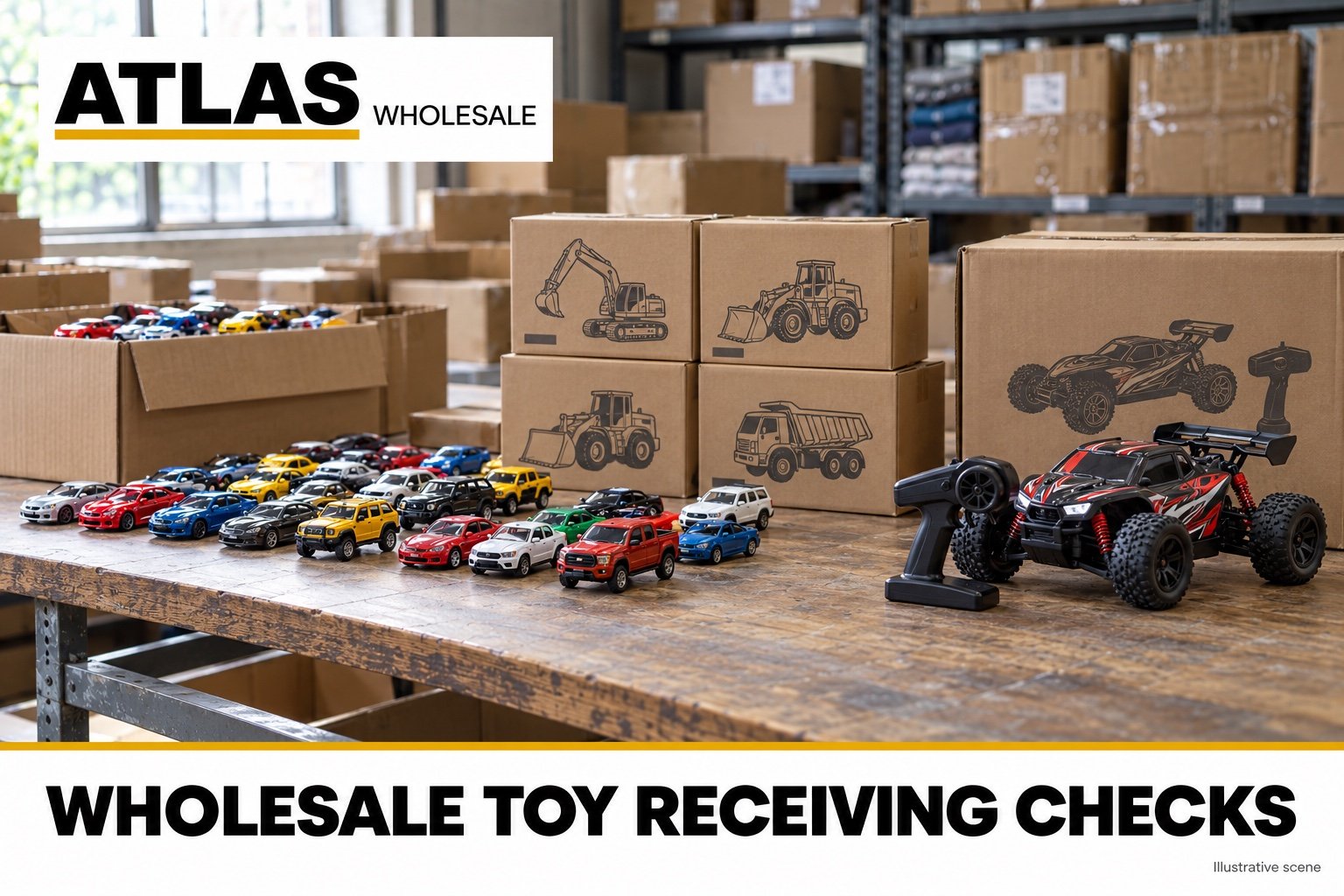
Receiving wholesale toys starts with matching the shipment to the order, checking exact product identity and separating count, completeness and safety questions. Keep the goods organized by model before listing them. A box that arrives intact can still contain a different variant or an incomplete play set.
This guide is for US retailers and resellers receiving toy cars, construction sets and similar inventory. It follows the toy manifest checklist with a practical arrival-to-listing workflow. It is not a product safety certification, and a quick function check cannot establish that every applicable requirement has been met.
Prepare a receiving plan before the truck arrives
Keep the confirmed quotation, product identifiers and packing information available. Assign a receiving area where cartons can be photographed and counted without mixing them with existing stock. Know who will check the delivery and where items needing review will be held.
Ask how cartons are labeled and whether the manifest lists individual toys, sets or retail packs. A 48-set construction lot is not the same counting unit as a loose-car assortment. Write your inventory unit clearly so staff do not treat components inside one play set as separate retail products.
Review the agreed returns and claims process before the shipment arrives. Ask about the evidence required for shortages or damage and the applicable reporting terms. Do not rely on an assumed universal claim window or discard packaging before checking the order.
Record delivery condition without losing product identity
Photograph visible carton and pallet condition, labels and any apparent damage. Connect each photo to a carton reference rather than keeping a folder of unidentified images. Note the delivery date and the relevant order information in the same receiving record.
Count cartons first, then reconcile retail units or sets within them. When one carton contains several models, separate the groups before entering stock. If a box is short, record expected and received quantities without replacing a missing count with an estimate from another carton.
Do not mix newly received toys into the sales floor while the main count is unresolved. Keeping the batch identifiable makes it easier to answer supplier questions and later trace an issue to the affected model or shipment.
Match models, variants and age information
Read the actual packaging and product identifiers, including model numbers where available. Similar-looking toy cars can have different sizes, features or included components. Match the shipment to the ordered variant rather than deciding that any product from the same broad category is an acceptable substitute.
Keep manufacturer age grading and warning information with the toy. Do not select an age range based only on the appearance of a toy or change a label to broaden your audience. If the item has missing or conflicting information, hold it while you obtain reliable clarification.
Brand references in a catalog identify the advertised product; they do not establish direct brand authorization or selling eligibility on every marketplace. Request sourcing documents where needed and check the rules of your intended channel before creating a large batch of listings.
Use a structured completeness check
For a construction set, compare the supplied contents and instructions with the exact product description. Distinguish damage to the outer carton from missing internal components. If the box is sealed, decide how you will verify completeness without representing opened units as factory sealed. Ask the supplier what evidence supports any completeness claim.
For RC cars, establish whether the controller, charging accessory and required power components are included. Follow manufacturer instructions for any permitted basic function check. Do not improvise repairs or charging arrangements for questionable batteries or damaged equipment.
For pull-back cars, check the described mechanism using appropriate handling and record the result. A simple movement check does not prove durability or suitability for an age group. If a unit is damaged or behaves abnormally, isolate it rather than placing it back into a general assortment.
Check recalls and product documentation
The CPSC resale information center explains US reseller responsibilities, including the prohibition on selling recalled products. Use the CPSC recall database to check identifying details and follow the applicable instructions when a match is found.
A search result is only as useful as the product identification used. Match the model, variant and other relevant details rather than searching only toy car. Keep a dated record of the check. No matching recall is not proof of compliance, and a visually attractive package is not a substitute for required product records.
Ask for the documentation applicable to the exact goods and your role in the supply chain. If a safety or compliance question remains unresolved, obtain qualified guidance before sale. Do not relabel a questionable toy as a collectible simply to avoid the original question.
Related Atlas product listings
These are catalog examples checked on October 20, 2026. A published listing does not guarantee current availability, an exact assortment or marketplace eligibility. Confirm the final quotation and product records before ordering.
- Wholesale Lot Of 48 GI Joe Toy Construction Sets – MSRP $9.99 Each – Your Price Is Only $2 Each. Count retail construction sets and clarify the contents and packaging condition.
- Wholesale Lot Of 8,000 Pull Back Die-cast 2 3/4″ Toy Cars – Your Price Is Only .34 Each – Free Shipping. Confirm the loose-unit or pack format and reconcile the advertised 8,000-car quantity.
- Wholesale Lot Of 312 RC Toy Cars – MSRPs To $29.99 Each – Your Price Is Only $7.50 Each. Confirm the RC model mix, controllers, power requirements and included accessories.
Choose inspection coverage and respond to patterns
A receiving sample can reveal a problem, but it cannot guarantee that every piece is identical. Select cartons from different positions and include different models and packaging conditions. Record how many items were examined and exactly what the check covered.
If several sampled units share a defect, expand the review before releasing the rest. Keep accepted, unresolved and unsuitable stock separate. Do not dilute the defect rate by combining unrelated models into one total or describe the whole lot as checked when only a few top-layer boxes were inspected.
Assign clear internal status labels and a person responsible for resolving holds. A toy awaiting missing information should not drift into the ready-to-sell shelf simply because receiving space is needed for another delivery.
Budget for the work between receiving and sale
Consider a hypothetical 50-set purchase costing $200 with $40 freight and $60 inspection and packing labor. The total is $300. If 45 complete sets are suitable for the planned channel, the allocated cost is about $6.67 per set before selling fees, customer delivery and overhead. This is an example, not an Atlas quote or predicted loss rate.
Estimate the work for each format separately. Loose cars may require counting and bundle preparation, while boxed sets may require variant-level photography and packaging notes. RC products can require more detailed component and instruction checks. A single labor allowance for all toy categories can hide meaningful differences.
Use your first receiving records to improve future purchases. Track recurring shortages, documentation gaps and preparation time by product type. That evidence is more useful than assuming that the largest unit count always offers the easiest resale opportunity.
Create listings from the inspected stock
Show the actual model, piece or set count, included accessories and condition. Explain whether packaging is marked, opened or absent. Preserve relevant warnings and instructions. Avoid product photos that show accessories the buyer will not receive.
For bundles, state exact contents or accurately define any variation. Keep inventory synchronized so individually sold components are not also promised in complete sets. Link internal stock records to the product listing to make customer questions and later issue handling easier.
The wholesale toy buying guide can help prepare the next inquiry after receiving. Use what you learned to ask more specific questions about model mix, packaging and documentation instead of simply requesting another mixed pallet.
Frequently asked questions
Do sealed boxes prove a toy set is complete?
Not on their own. Ask what the supplier confirms, check package identity and establish a suitable verification method without misrepresenting opened stock.
Can I change the stated age range?
Use reliable manufacturer information and applicable requirements. Do not invent age suitability from appearance or to reach a wider market.
Does no recall match mean the toy is safe?
No. Recall screening is one check; it does not establish full safety or compliance.
What if the RC controller is missing?
Treat the set as incomplete until an appropriate solution is verified. Do not assume any controller will work with the model.
Should damaged toys be mixed into discount bundles?
Do not hide defects or unresolved safety questions in an assortment. Hold questionable stock and resolve its appropriate handling before offering it for sale.
Plan your next purchase
Browse toys and baby inventory and send Atlas the product link with the intended models, packaging requirements, documentation needs and delivery ZIP code. Atlas Wholesale Group is based in Dallas, Texas, USA. Email admin@atlaswholesalegroup.com or call/WhatsApp +1 (214) 236-7711. Ask for written confirmation of availability, condition, quantities and delivery charges before placing an order.