
Wholesale Beauty Photography: Clear Product Images
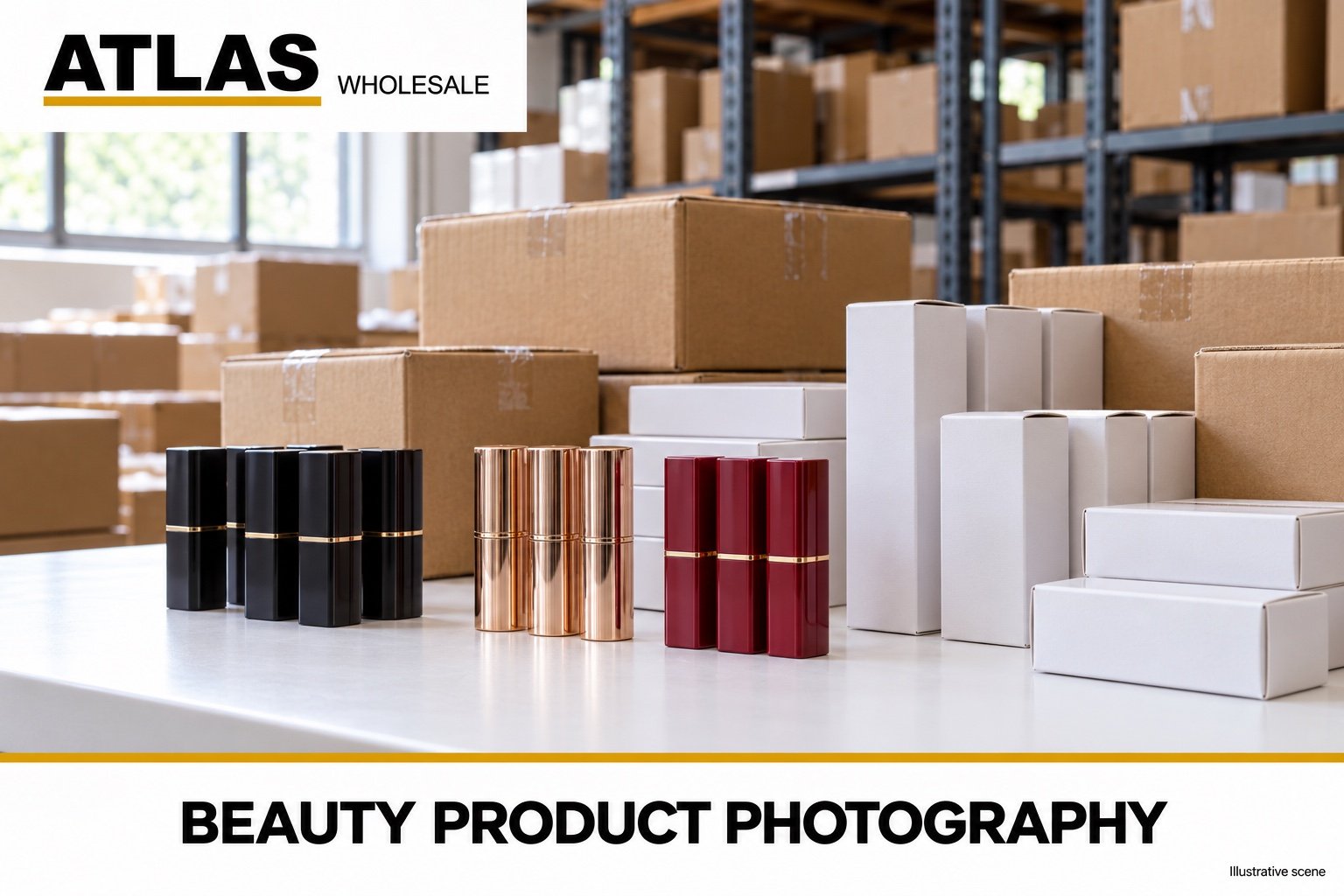
Wholesale beauty product photography should show the exact product, shade identifier, package condition and contents without changing what the buyer will receive. Consistent lighting and clear label photographs matter more than elaborate styling. Keep illustrative marketing images separate from photographs used as evidence of sale stock.
This guide is for US beauty resellers preparing lipstick and personal care listings. It complements the beauty shade mix guide and beauty inventory guide. Good photography cannot establish authenticity, product history or shelf life; those questions need reliable records.
Decide which questions the photographs must answer
Before setting up a camera, list the customer questions: What product is this? Which shade or variant? What size? Is the outer carton present? Is the seal intact? Are there visible marks or differences? Build the image sequence around those questions instead of creating a decorative scene that leaves the practical details unreadable.
Use a separate photography record for each product and shade group. Keep the manufacturer identifier and internal SKU alongside the image filenames. A folder named pink lipstick becomes difficult to use when several brands have similar colors or the same product arrives in different packaging.
Confirm that the sample selected for photography represents the offered stock. If package condition varies, either show the range fairly or create distinct condition groups. One pristine carton should not represent an assortment containing materially different packaging without explanation.
Set up a simple repeatable workspace
Use a stable tabletop, plain background and soft, consistent light. Position the product so its shape and label can be seen without distracting reflections. A phone camera can be useful when focus, exposure and framing are controlled; expensive equipment does not automatically make the product information clearer.
Keep the shooting area clean and separate from open receiving cartons. Place only the product and necessary reference items in the frame. Avoid food, decorative liquids or unrelated accessories that could confuse what is included or complicate clean handling.
Save a reference setup photograph and basic camera settings so the next session is comparable. Consistency helps customers compare variants. It also helps staff notice whether a color difference comes from the actual packaging or from a different light source.
Build a practical image sequence
Start with an overall view of the exact retail unit and packaging. Add a readable shade label, relevant size information and visible seal or package condition. Show a multipack together with a clear count. Use additional views for marks, crushed corners or other condition details that matter to the offer.
Do not bury the most important identifier in a distant group photograph. A customer should be able to match the printed shade name or code with the text description. Photograph both outer and immediate packaging where necessary to explain what is present, without opening sealed stock simply to create more images.
For a mixed lot, show actual assortment evidence alongside a written breakdown when available. If the supplier provides only example images, identify that limitation in the buying record. Do not transform an example assortment into a precise claim about every piece in the shipment.
Keep seals and demonstration stock separate
Do not open retail units for swatching and later describe them as sealed or unopened. If demonstration material is appropriate, keep it clearly identified and physically separate from sale inventory. Record which unit was opened so it cannot accidentally return to the unopened shelf.
A photograph of a seal shows its visible state at that moment; it does not prove authenticity or storage history. Retain sourcing and available batch records separately. Resolve questionable packaging before listing instead of using an angle that hides the concern.
Avoid showing cosmetic application or creating testing claims without suitable evidence and procedures. This article is about communicating product details, not assessing whether a cosmetic is safe for a particular person. Product-specific health questions require appropriate professional advice.
Represent color honestly
Use consistent light and a neutral background, and avoid filters that intentionally shift the shade. Compare the image with the physical item under the same setup. A colorful screen preview is not a reliable basis for replacing the manufacturer shade identifier with your own exact-match promise.
Explain the limits of screen presentation while still making a reasonable effort to show the product accurately. A general screen-colors-may-vary note does not excuse a heavily altered image. Keep the original file so editing choices can be reviewed later.
If using a manufacturer color reference, check that it is for the exact product and that you have permission to use it. Identify digital swatches or reference graphics appropriately. Do not imply that a generated color patch is a physical swatch tested from the offered stock.
Related Atlas product listings
These are catalog examples checked on October 26, 2026. A published listing does not guarantee current availability, an exact assortment or marketplace eligibility. Confirm the final quotation and product records before ordering.
- Wholesale Lot Of 1,000 Fenty Beauty By Rihanna Matte moiselle Lipstick 0.06 oz – Boxed – UPC 816657024562 – MSRP $19.00 Each – Your Price Is Only $1.90 Each. Photograph the printed shade identifier, 0.06 oz product size and boxed condition for the actual stock.
- Wholesale Lot of 6,823 Maybelline Color Sensational Lipstick – Assorted Shades – Sealed – UPC 041554050615 – Your Price Only $0.60 Each. Keep each confirmed shade group identifiable rather than presenting assorted as an equal color distribution.
- Wholesale Lot Of 5,436 Health, Beauty, And Personal Care Items – Average Retail Value $4.00 Each – Your Price Is Only .95 Each – Free Shipping. Use an item-level manifest and photographs that distinguish the different personal care products.
Keep product information readable and supported
The FDA Cosmetics Labeling Guide explains labeling topics including product identity, net quantity and ingredient information. Photography can help customers read information, but it does not replace applicable labeling obligations. Review the guidance for the exact product and your role if importing or repackaging.
Do not edit away information that materially affects the offer or cover it with a decorative sticker. Avoid adding claims such as allergy-free, therapeutic or guaranteed safe merely to make the image more persuasive. Required review depends on the product and claim, not on how attractive the artwork looks.
Write accompanying text from verified information. Keep manufacturer facts, supplier statements and your observations distinct in the internal record. When a detail remains unknown, request clarification rather than allowing the photograph to imply certainty.
Use editing to improve visibility, not invent condition
Straightening, sensible cropping and modest exposure correction can make an image easier to understand. Removing a scratch, replacing a damaged corner or changing a label alters the product evidence. Keep those boundaries clear in your photography instructions.
For a blog feature banner, a clearly labeled illustrative scene can introduce a topic. It should not become the main proof of a lot quantity, brand packaging or seal condition. Store illustrative assets in a different folder from actual inventory photographs to reduce accidental reuse.
Before publishing, compare the finished image with the original and the physical item. Check that the product identifier, package count and color have not been unintentionally changed. If another person performs editing, give them a checklist instead of assuming they know which imperfections are important.
Make the photography workflow economical
Estimate time per product group for setup, shooting, file naming, editing and listing. A hypothetical session costing $60 and producing usable images for 20 distinct listings allocates $3 per listing before other selling costs. That is a planning example, not a promised cost or result.
Photograph similar package formats together while keeping the identity record accurate. Prepare a short shot list before opening each group. Repeatedly returning to the shelf for a missing shade-label picture can consume more time than taking the view during the first pass.
Track common customer questions after the listings go live. If shoppers repeatedly ask about the seal or size, add clearer evidence where appropriate. Measure the usefulness of the images through questions and errors, without assuming that any single image change caused a sales increase.
Frequently asked questions
Can I open a sealed lipstick for photographs?
Opening changes its condition. Keep any demonstration unit separate and do not describe it as unopened sale stock.
Can a photo prove authenticity?
No. Photographs can show identifiers and visible condition, but authenticity and sourcing need reliable supporting evidence.
Should I apply a filter to make colors more attractive?
Avoid edits that misrepresent color. Use consistent lighting and preserve the printed shade identifier.
Can a blog banner replace product photographs?
No. An illustrative banner explains a topic; customers still need accurate evidence of the actual offered stock.
What is the most useful close-up?
Choose the detail needed to identify the product, often the shade name or code and relevant packaging condition. Make it readable and connect it to the correct listing.
Plan your next purchase
Browse Atlas beauty and personal care lots and send Atlas the product link with your product and shade preferences, packaging needs and delivery ZIP code. Atlas Wholesale Group is based in Dallas, Texas, USA. Email admin@atlaswholesalegroup.com or call/WhatsApp +1 (214) 236-7711. Ask for written confirmation of availability, condition, quantities and delivery charges before placing an order.