
Wholesale Beauty Shade Mix: A Reseller Planning Guide
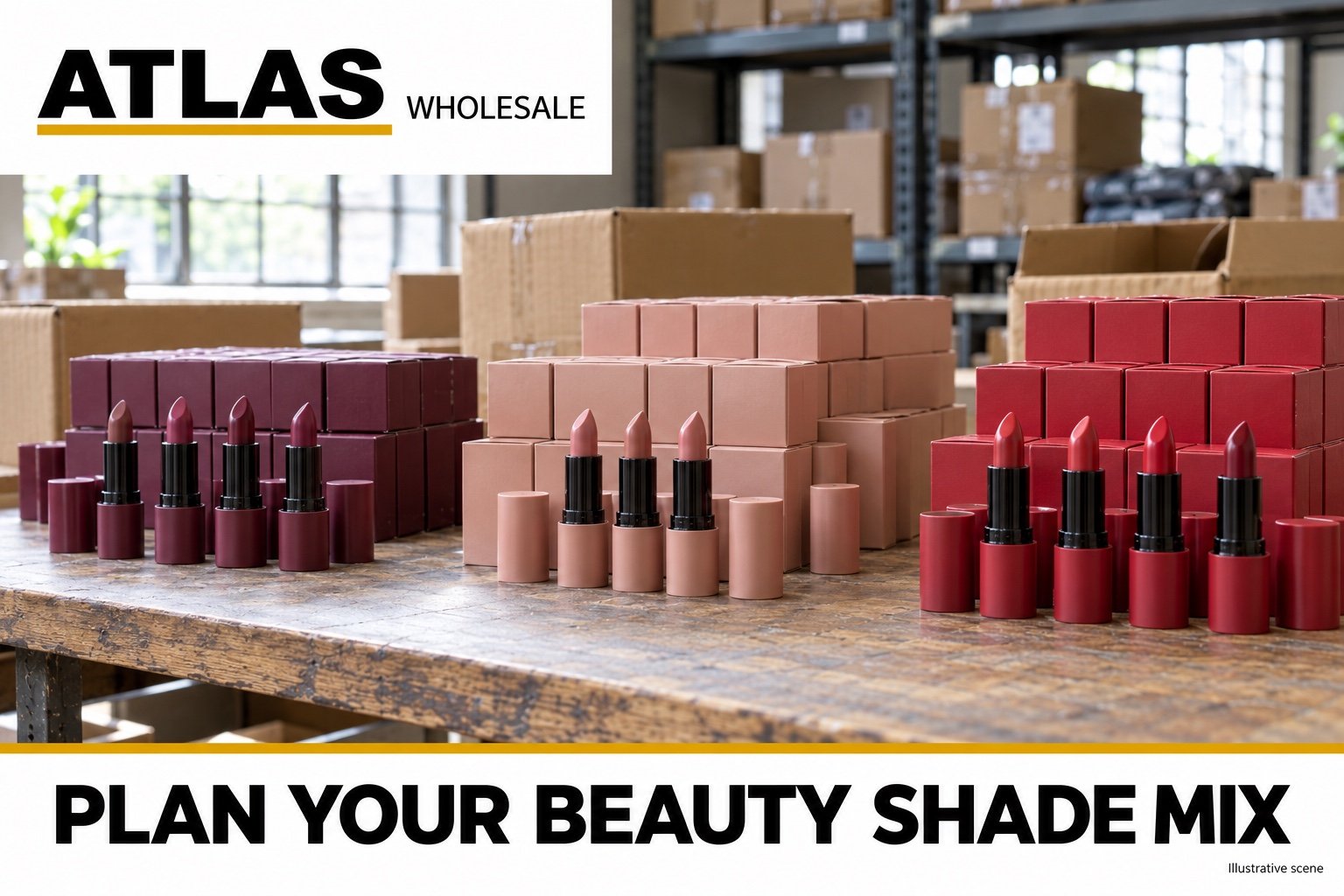
A wholesale beauty shade mix should be planned by exact shade, quantity, product condition and the customers you can realistically reach. An assorted lipstick lot can contain repeated colors, uneven quantities or unfamiliar finishes. Before comparing unit prices, request the available shade breakdown and decide how each group will be listed, stored and sold.
This guide focuses on assortment planning for US beauty resellers, using Atlas lipstick and personal care listings as examples. Read the beauty inventory and shelf-life guide alongside it for product age and storage questions. A useful shade plan cannot compensate for unresolved condition or sourcing concerns.
Ask what assorted actually includes
Assorted describes variation, not balance. Ask for shade names or codes, counts, finish, product size and packaging type. Establish whether the breakdown is exact, estimated or unavailable. Photographs can help identify the products, but a photograph of five colors does not establish equal quantities of those colors in the shipment.
Keep shade names separate from color descriptions you create for navigation. A brand shade code is an identifier; a phrase such as warm nude is a subjective description. Preserve the printed code in your records so customers and staff can identify the exact variant even when lighting or display settings change its appearance.
If a supplier cannot provide counts, do not quietly distribute the total evenly in your budget. Model the assortment as uncertain and decide whether your sales channels can absorb a concentrated color group. A lot that suits a specialist color audience may not suit a shop seeking a broad everyday range.
Match shades to evidence from your customers
Review your own orders and customer requests rather than assuming all buyers want the same colors. Compare product format, finish and price level as well as shade family. A matte lipstick and a glossy product in a similar color can appeal to different shoppers and need different product descriptions.
For a new store, research comparable listings in the channel you intend to use. Separate asking prices from completed sales and note whether the comparison is the same product, size and condition. A recognizable brand can attract interest, but it does not guarantee that a particular shade or discontinued variant will sell quickly.
Write down the proposed customer and selling route for each shade group. If the only plan for a large group is that someone will probably buy it, keep investigating. Consider whether you have the photography, catalog organization and storage space to make the assortment easy to shop.
Inspect packaging without contaminating sale stock
On receiving, count by product and shade, then inspect seals, cartons and visible labels. Separate crushed, leaking, opened or otherwise questionable items from the sale-ready group. Do not open every sealed lipstick to create swatches and then describe those units as unopened inventory.
Use manufacturer-provided color references where you have permission, or clearly identified demonstration material kept apart from sale stock. Do not disguise a digital color approximation as a tested swatch. When photographing packaging, use consistent lighting and keep the shade identifier readable. Explain that screen presentation may differ from the physical product.
An intact carton is not proof of authenticity, suitable storage history or unlimited shelf life. Request sourcing records and available batch information. If condition or product history cannot be resolved, pause the purchase or hold the affected stock instead of adding unsupported assurances to the customer listing.
Keep required information visible
The FDA Cosmetics Labeling Guide explains US cosmetic labeling topics including identity, net quantity and ingredient information. Review the guidance for the product and your role, especially when importing, repackaging or selling assortments. A retailer-created sticker should not obscure information the customer needs.
Keep original shade names and product identity connected to any bundle. Do not make therapeutic or safety claims based only on a cosmetic brand or an attractive package. When a question requires a product-specific regulatory determination, obtain qualified review rather than treating a marketing guide as a compliance certificate.
Related Atlas product listings
These are catalog examples checked on October 20, 2026. A published listing does not guarantee current availability, an exact assortment or marketplace eligibility. Confirm the final quotation and product records before ordering.
- Wholesale Lot Of 1,000 Fenty Beauty By Rihanna Matte moiselle Lipstick 0.06 oz – Boxed – UPC 816657024562 – MSRP $19.00 Each – Your Price Is Only $1.90 Each. The listing describes boxed 0.06 oz lipstick; confirm the actual shade and batch breakdown.
- Wholesale Lot of 6,823 Maybelline Color Sensational Lipstick – Assorted Shades – Sealed – UPC 041554050615 – Your Price Only $0.60 Each. The listing describes sealed assorted shades; request counts instead of assuming a balanced mix.
- Wholesale Lot Of 5,436 Health, Beauty, And Personal Care Items – Average Retail Value $4.00 Each – Your Price Is Only .95 Each – Free Shipping. Request the item-level manifest. A personal care assortment is not necessarily all cosmetics or all lipstick.
Use shade-level planning instead of one average price
Consider a hypothetical 100-unit assortment with 40 units you expect to list individually, 35 suitable for clearly described bundles and 25 requiring further sales research. Those are planning groups, not a forecast. Assign separate preparation costs and realistic selling assumptions to each group.
Suppose the total acquisition, freight and preparation cost is $250 and you expect 80 units to sell through the planned channels. The allocated cost is $3.13 per expected sale, rounded, before selling fees and customer delivery. This does not mean the remaining units have no value; it means their sale is not yet supported in the main scenario.
Compare a conservative scenario with your main plan. Reduce expected sales and include markdowns, photography time, packaging and fees. Avoid using an original MSRP as predicted revenue. Your own selling price needs evidence from the actual product, condition, customer demand and sales channel.
Build bundles customers can understand
A useful bundle has a clear purpose, such as a named shade family or a disclosed set of exact variants. List the number of pieces, product names, sizes, shade codes and condition. Show the actual bundle contents or explain any genuine variation before the customer orders.
Do not hide an uneven assortment behind a random colors label if the buyer expects a specific range. If offering a surprise assortment, establish exactly what is guaranteed and what varies, and ensure the selling channel allows that format. Check whether duplicate shades are acceptable to the intended buyer.
Keep stock quantities synchronized across individual listings and bundles. When one shade appears in several offers, reserve the correct quantity as each sale occurs. Otherwise a bundle can become incomplete even though the total beauty inventory appears sufficient.
Organize storage and restocking decisions
Follow the manufacturer storage instructions and keep cartons identifiable. Track receipt date and available product or batch details. Store inspection holds separately so a staff member does not accidentally pick them for an order. A simple shelf code is more useful than relying on the color of the outer carton.
After sales begin, compare actual shade movement, customer questions and returns with your original plan. Record whether a slow item has low demand or merely poor photos and unclear labeling. That distinction can guide listing improvements, but it does not justify promising sales results before the evidence exists.
Use the health and beauty buying checklist to prepare a supplier inquiry. Ask about current stock, provenance records, seals, storage information and the agreed claims process before committing to the assortment.
Keep promotional images separate from stock evidence
A styled feature photograph helps explain the topic, but it should not be used as proof of a lot’s exact contents. Keep actual supplier and receiving photographs in the buying record. When a customer asks which shades they will receive, answer from the confirmed manifest and inspected inventory rather than from a decorative image. Clearly distinguish illustrative scenes, digital color references and photographs of the actual sale units.
Frequently asked questions
Does assorted mean equal numbers of each shade?
No. Request the actual quantities and ask whether the figures are exact or estimated. A range photo is not a quantity breakdown.
Can I sell opened swatch units as sealed?
No. Keep demonstration and sale stock separate and describe the actual condition accurately.
Does a boxed lipstick have a guaranteed shelf life?
Not from the box alone. Confirm product history and manufacturer guidance rather than inventing a universal expiry period.
Should every shade have the same retail price?
Not automatically. Consider the exact product, demand and selling costs. Avoid treating a catalog MSRP as a promised resale value.
What information belongs in a beauty bundle?
Identify product names, shade codes, piece count, sizes and condition, and explain any variation or duplicates before purchase.
Plan your next purchase
Browse health and beauty lots and send Atlas the product link with your preferred product formats, shade needs, quantity and delivery ZIP code. Atlas Wholesale Group is based in Dallas, Texas, USA. Email admin@atlaswholesalegroup.com or call/WhatsApp +1 (214) 236-7711. Ask for written confirmation of availability, condition, quantities and delivery charges before placing an order.