
Wholesale Clothing Bundles: A Practical Resale Plan
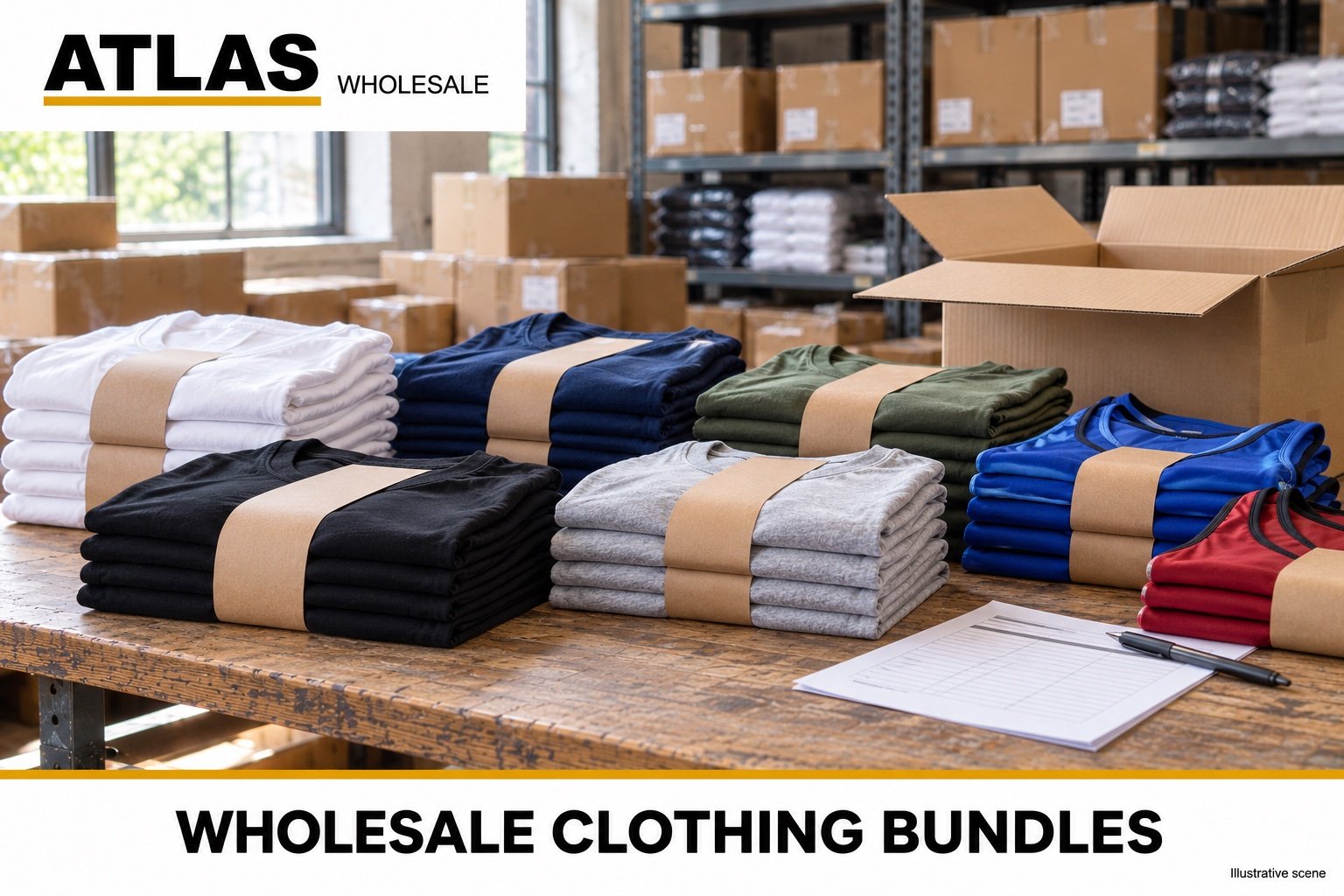
Build wholesale clothing bundles around a clear customer need, confirmed garment details and a cost you can support after packing and selling expenses. A useful bundle explains what the customer receives. It should not be a way to hide unwanted sizes, undisclosed defects or an assortment you have not counted.
For US apparel resellers, bundling can simplify an offer when the pieces belong together. It can also add handling work and create inventory mistakes. This guide develops a practical bundle plan using Atlas clothing listings, alongside the size mix guide and clothing inspection checklist.
Choose the buyer before choosing the bundle
Begin with a specific use: a few everyday T-shirts in one size, a disclosed selection of junior styles, or a group of sports garments for a buyer who wants that category. These are possible formats, not claims that every listed lot can supply them. Confirm the actual stock before advertising a combination.
Define what the buyer values about buying together. It may be a convenient quantity, a coordinated format or fewer separate checkout decisions. If the only benefit is that you need to clear a shelf, reconsider the contents. A bundle still needs a sensible product description and a customer who wants all its components.
Avoid treating the word mixed as a complete offer. State whether colors, styles and brands are fixed or variable, whether duplicates are possible and which sizes are guaranteed. A clearly described variable bundle is different from a photograph suggesting exact pieces while the buyer receives something else.
Create a garment-level inventory first
Sort received stock by style, labeled size, condition and relevant color group. Count usable pieces before allocating any bundles. Keep inspected quantities separate from estimated quantities on a supplier manifest. A plan based on the advertised size range can fail when the actual counts are concentrated in one size.
Give each garment group a simple internal reference. For example, use one code for a particular inspected style and size rather than a code that simply means shirts. Record the available count and the condition description attached to that group. This lets staff build the correct pack even if they did not inspect the original delivery.
Where measurements matter, keep them connected to the style. Do not assume a medium sports top and a medium junior garment have interchangeable fit. If a bundle contains different sizing systems, explain them clearly or select a format that does not imply identical fit across unrelated pieces.
Decide what is fixed and what may vary
Write a bundle recipe before photographing it. A recipe can specify three pieces from a named style group, one labeled size and a disclosed range of colors. It should also explain how duplicates are handled and which condition is acceptable. Use only recipes supported by the inventory you have received.
If the contents vary, photograph a representative pack and state the variation next to the offer, not only in a distant policy page. If the contents are fixed, reserve those exact pieces for that listing. Changing a component after the order without agreement undermines the description that prompted the customer to buy.
Use the same recipe in the listing, pick sheet and packing check. When the public offer says four pieces but an internal shortcut says small pack, confusion becomes likely. Give staff an exact piece count and a clear exception process when one component is unavailable.
Keep irregularity and condition visible
A slightly irregular T-shirt can suit a buyer who understands the particular variation, but the term does not define the flaw. Request and inspect the actual condition. Do not combine visibly different grades and describe the whole bundle as first quality simply because some pieces look pristine.
Where defects differ materially, separate the stock into appropriate groups or describe the exact flaws in a fixed bundle. Avoid claiming that an irregular garment is suitable for printing, workwear or another use without relevant information. The receiving record should support the words on the customer listing.
The FTC advertising guide explains the need for truthful claims supported by evidence. For a clothing bundle, that means the pictures, quantity and condition description should work together rather than creating a misleading impression. Review applicable labeling requirements if you import or relabel garments.
Related Atlas product listings
These are catalog examples checked on October 26, 2026. A published listing does not guarantee current availability, an exact assortment or marketplace eligibility. Confirm the final quotation and product records before ordering.
- Wholesale Lot Of 720 Gildan Color T-Shirts For Men – Slightly Irregular – Sizes S-3XL – Your Price Is Only $1.50 Each. A possible starting point for same-category packs; confirm size counts and the meaning of slightly irregular.
- Wholesale Lot Of 1,000 Pieces Of Brand New Junior Nordstrom Rack Clothing – Many Other Styles In The Lot As Well – S-XL – Only $1.5 Each. Investigate style-level counts before promising a coordinated junior clothing selection.
- Wholesale Lot of 4,683 Pieces of Men’s and Women’s Sports Clothing by Team 365, Ultraclub, and Econscious – Sizes XS-4XL – Estimated Original Retail Value Over $40,000 – Wholesale Price Only $1.00 Each. Request the brand, style and size breakdown before planning sportswear combinations.
Calculate the price from complete packs
Suppose a hypothetical three-shirt pack has $6 in garment cost, $1 packaging, $2 allocated preparation labor and $1 inbound freight. Its cost before selling fees and customer delivery is $10. If the offer sells for $16, the remaining $6 is not net profit: fees, delivery, returns and overhead still need allowance. These are illustrative figures, not Atlas prices.
Calculate using complete packs, not the total number of garments divided by your preferred pack size. If you need three items in the same size and only have two suitable pieces in one group, those pieces do not create a complete pack. Record leftovers and decide how they will be sold without double-counting them.
Run a second scenario with lower sales and additional markdowns. Compare the bundle against individual listings using your own preparation time and channel costs. Bundling may reduce listing count, but it does not automatically improve margin or make slow sizes desirable.
Photograph the promise you are making
For fixed contents, show the actual pieces, size labels and relevant condition details. For a variable assortment, use examples that fairly represent the allowed range. Keep decorative feature images separate from evidence of the exact sale stock. An illustrative warehouse photo should not be used to guarantee a particular color or style.
Write a short title identifying the garment type, piece count, size and key condition. In the description, list what is guaranteed first, followed by permitted variation and useful measurements. Avoid unsupported original-value totals or claims that a pack is certain to sell quickly.
Check the final listing on a small screen. A buyer should be able to understand the count and size without zooming into a busy collage. Important condition information belongs in readable text as well as photographs.
Reserve components and check every packed order
When a bundle is listed, decide how its components are reserved against individual offers. If the same six shirts support both single-item listings and two three-packs, a sale in one channel must reduce the available stock in the others. A simple reservation sheet can work if it is maintained consistently.
At packing, compare the contents with the recipe, then check count, size and condition. Record substitutions only when the offer permits them or the customer has agreed. Keep bundle packaging from covering information the buyer needs to identify and care for the garments.
After a few sales, review customer questions and packing errors. Repeated questions about random colors may mean the variation is not clear enough. Use that feedback to improve the offer instead of assuming every return is simply a buyer preference issue.
Frequently asked questions
Can I mix sizes in one clothing bundle?
Yes, if the offer clearly identifies the sizes and the format suits the intended buyer. Do not imply a same-size pack when the pieces differ.
Does a bundle need a discount?
Its value can include convenience, but any stated discount must be supportable. Calculate the complete costs before choosing a price.
Can I use a sample photograph for variable packs?
Use a representative example and explain what varies near the offer. Do not suggest the pictured contents are guaranteed if they are not.
How should I handle leftover garments?
Track them separately and plan another honest offer or individual sale. Do not count incomplete packs as ready inventory.
Are irregular garments suitable for bundles?
Possibly, when the actual defects and condition are understood and disclosed. Bundling does not remove the need to inspect and describe them accurately.
Plan your next purchase
Browse Atlas clothing and apparel lots and send Atlas the product link with the bundle format, target sizes, quantity and delivery ZIP code. Atlas Wholesale Group is based in Dallas, Texas, USA. Email admin@atlaswholesalegroup.com or call/WhatsApp +1 (214) 236-7711. Ask for written confirmation of availability, condition, quantities and delivery charges before placing an order.