
Wholesale Clothing Inspection: A Reseller Checklist
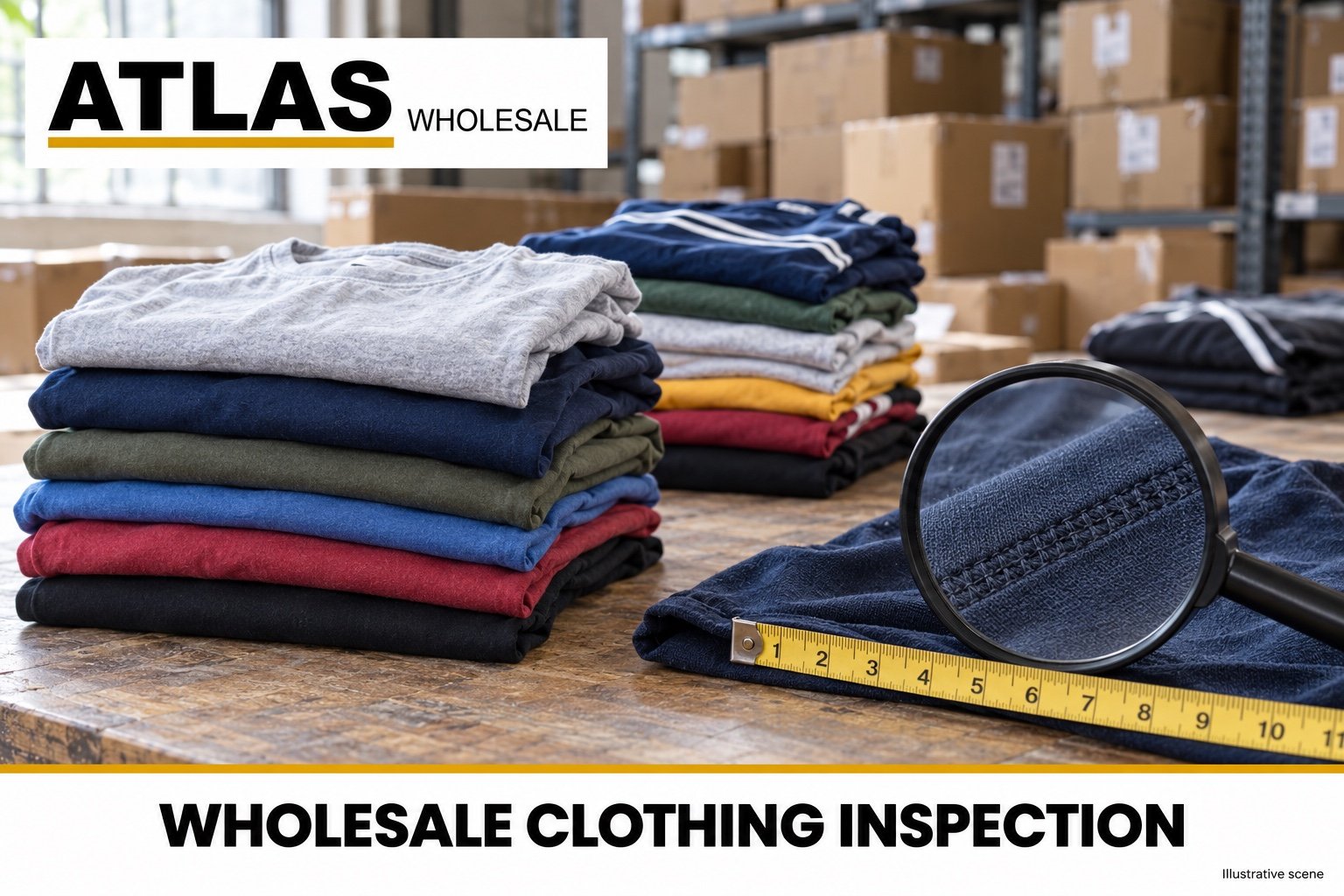
A wholesale clothing inspection should establish what each garment is, which defects are present and how accurately you can describe it to your customer. Start with the lot description, request representative condition photos, then use a consistent receiving checklist. A low unit price is useful only when the clothes suit your selling channel and your team can prepare them economically.
This guide focuses on condition and receiving checks for US apparel resellers. It complements the clothing size mix guide, which explains how to assess quantities by size. Neither a size range nor a familiar brand name tells you the condition of every piece in a mixed lot.
Separate condition terms before comparing offers
New, overstock, irregular and customer return are not interchangeable descriptions. New describes prior use; overstock describes an inventory situation; irregular describes a departure from the intended specification. A returned item may be unused, worn, incomplete or damaged. Ask the supplier which description applies to the actual stock, rather than treating a promotional photograph as a condition report.
Write the condition terms into your comparison sheet. If the explanation is only verbal, ask for it in the quotation or order notes. Record whether the lot contains mixed grades and whether the described condition applies to every carton. That simple distinction can prevent a disagreement when one box looks different from another.
What slightly irregular T-shirts can mean
An irregular garment may have a stitching, color, measurement or other production variation. The term alone does not identify the defect or its severity. For a printing project, the location of a visible flaw can matter as much as the size of that flaw. A mark across the chest has a different effect from a small interior seam variation.
Ask for close photographs of typical irregularities and examples of the more noticeable issues. Do not assume every irregular garment is suitable for decoration or that a wholesale description gives permission to remove labels. If the supplier cannot characterize the defects, treat that uncertainty as a buying limitation and select a quantity you can assess.
For mixed-brand garments, keep the original description attached to the receiving record. Avoid upgrading irregular stock to first quality simply because the defect is not obvious in a quick inspection. Your eventual listing should describe the item you actually received, with photographs that show relevant variations.
Build an inspection station before delivery
Set aside a clean, well-lit surface, measuring tape, camera and labeled containers for accepted stock and items requiring review. Keep the purchase documents nearby. Inspecting directly from a pallet onto a crowded sales rack makes it harder to connect a defect with its carton or style.
Create a row for each style, size and condition group. Record expected quantity, received quantity, measurements where relevant, visible defects and photographs. Give each carton an internal reference so an issue can be traced without opening the entire shipment again. Use neutral descriptions such as uneven hem or missing tag instead of an unexplained grade letter.
Use the same sequence for every garment
Begin with identity and labels, then examine the front, back, sleeves, seams and closures. Look for holes, stains, loose stitching, inconsistent panels and missing components. For jackets, check that closures move normally without forcing them. For T-shirts, compare neckline shape and hem construction across the same style.
Measure consistently: lay the garment flat without stretching it, note the method and photograph representative examples. A measurement taken around a garment is different from a flat width. Do not apply one garment measurement to unrelated styles. If a size label and measurement seem inconsistent, investigate rather than silently changing the labeled size.
A receiving spot-check is a screening process, not a guarantee that every garment is defect-free. Choose your inspection coverage based on the assortment and the consequences of missing an issue. If sampled pieces show repeated problems, expand the inspection before releasing the remaining stock for sale.
Keep labels and care information connected to the item
For US resale, labeling needs more attention than keeping a branded hangtag intact. The FTC textile labeling guide covers fiber content, origin and responsible business identification for covered products. Its care labeling guidance explains care instruction obligations for covered manufacturers and importers. Review the applicable rules if you import or relabel stock.
Do not invent a fiber percentage from touch or a care instruction from appearance. Preserve the existing product information while resolving missing or conflicting details. If you intend to decorate garments, establish the fabric and care requirements through reliable product information before promising a particular printing result.
Related Atlas product listings
These are catalog examples checked on October 20, 2026. A published listing does not guarantee current availability, an exact assortment or marketplace eligibility. Confirm the final quotation and product records before ordering.
- Wholesale Lot Of 720 Gildan Color T-Shirts For Men – Slightly Irregular – Sizes S-3XL – Your Price Is Only $1.50 Each. Ask which defects make this assortment slightly irregular and request size counts.
- Wholesale Lot Of 1,000 Pieces Of Brand New Junior Nordstrom Rack Clothing – Many Other Styles In The Lot As Well – S-XL – Only $1.5 Each. Confirm style variation, label condition and garment-level measurements where needed.
- Wholesale Lot of 4,683 Pieces of Men’s and Women’s Sports Clothing by Team 365, Ultraclub, and Econscious – Sizes XS-4XL – Estimated Original Retail Value Over $40,000 – Wholesale Price Only $1.00 Each. Request counts by brand and style; a broad size range is not a complete manifest.
Calculate preparation cost rather than only purchase cost
Consider a hypothetical 100-piece purchase costing $150, with $40 freight and $30 inspection and preparation. The total is $220. If 90 pieces are suitable for your intended sales channel, the allocated cost is about $2.44 per usable piece, before selling fees, customer delivery and overhead. These figures are a planning example, not an Atlas quotation.
Keep repair, steaming, photography and listing time visible in the calculation. Do not assume that laundering or repair will restore a garment to the advertised condition. A buyer who can sell clearly disclosed irregular stock has a different cost structure from a store that requires uniform first-quality presentation.
Create a second scenario with fewer usable pieces and slower sales. If the purchase only works when every item sells immediately, reconsider the quantity or selling route. The general clothing lot guide provides additional questions to ask before committing to a mixed assortment.
Document differences and publish accurate listings
Photograph cartons and their contents before discarding packaging. Separate shipping damage from garment condition and compare the count with the agreed documents. Contact the supplier through the returns and claims process while the evidence and packaging are available; check the actual terms rather than assuming a universal claim period.
For your retail listing, show the relevant garment, labeled size, useful measurements and disclosed flaws. Do not use a pristine example to represent a materially different group without explanation. Maintain one record for the supplier description and another for your inspection result so future buyers and staff can understand the difference.
Keep the purchase decision separate from the inspection result
Before ordering, write down what you know, what the supplier has estimated and what remains unknown. After receiving, replace estimates with measured counts and observed condition. Keep the original record rather than editing it away. The difference tells you whether a future purchase of a similar lot deserves a different quantity or preparation budget.
For example, a group of shirts may pass a visual appearance check but still need individual measurement before online sale. Record those as two separate tasks. The receiving result should support your customer description, while the purchase record supports your discussion with the supplier. Combining both into a vague acceptable grade makes it harder to learn from the order.
Frequently asked questions
Are irregular clothes automatically used?
No. Irregularity describes a specification or production issue, while used describes prior use. Ask for both the use history and the defect explanation.
Can I inspect only the top carton?
That may miss variation elsewhere in the shipment. Sample different cartons and styles, and expand the inspection if you find recurring problems.
Should I remove labels before resale?
Do not remove required information as a routine preparation step. Resolve labeling questions for the product and your role, especially if importing or relabeling.
Does inspection prove branded garments are authentic?
A visual check alone does not establish provenance or authenticity. Request reliable sourcing documentation and verify your selling platform requirements.
What should I ask Atlas before buying?
Send the product URL, intended selling channel, target sizes and delivery ZIP code. Request condition examples, style counts and a written quotation.
Plan your next purchase
Browse clothing and apparel lots and send Atlas the product link with your intended use, target sizes and receiving requirements. Atlas Wholesale Group is based in Dallas, Texas, USA. Email admin@atlaswholesalegroup.com or call/WhatsApp +1 (214) 236-7711. Ask for written confirmation of availability, condition, quantities and delivery charges before placing an order.