
Wholesale Home & Kitchen Lots: How to Choose Stock for Resale
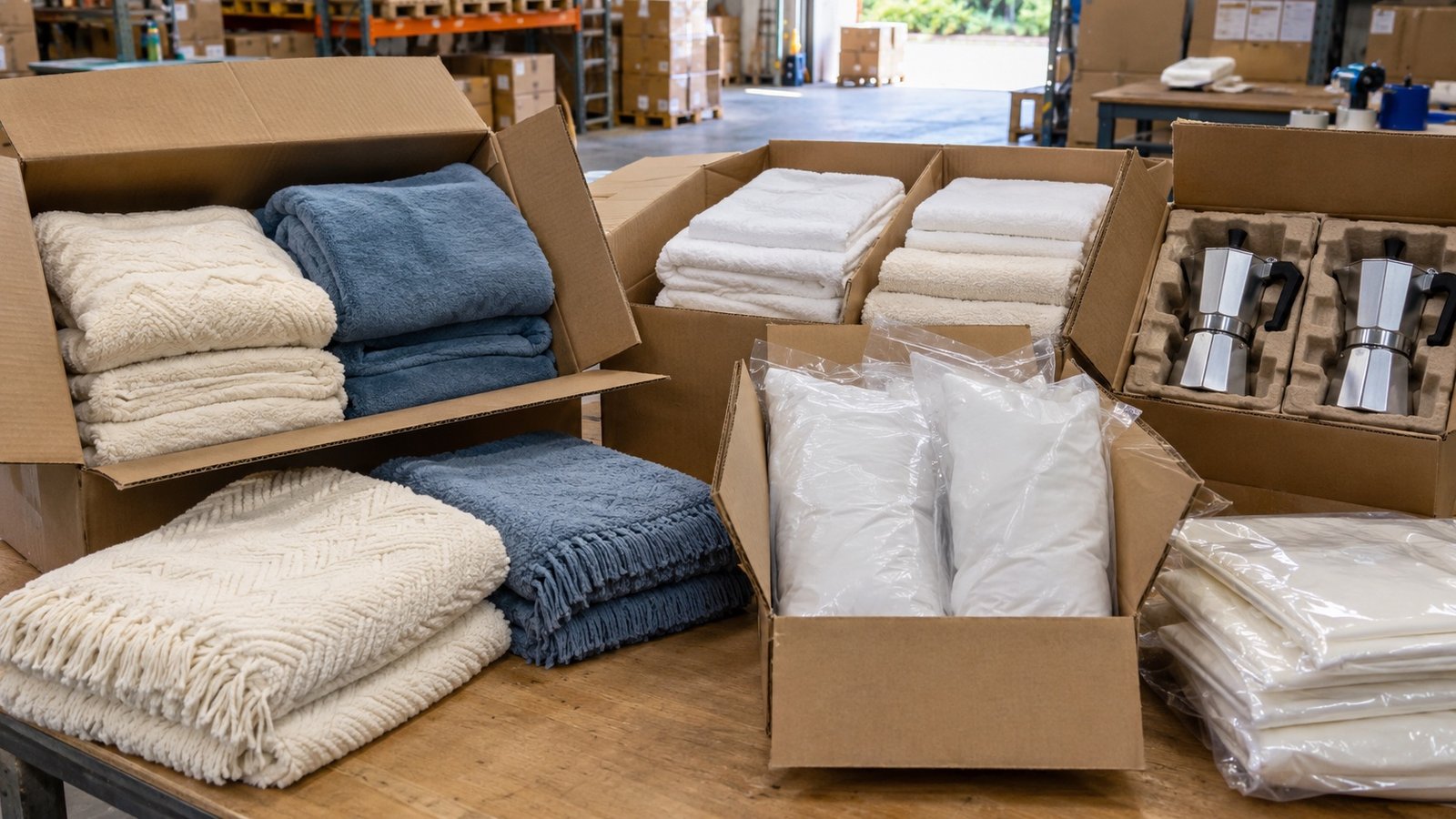
A home goods lot can look attractive until you account for bulky cartons, incomplete sets or broken pieces. Buying wholesale home and kitchen inventory works best when you compare the stock with the space, packing materials and customers you already have.
This guide covers the checks that matter before ordering. Browse the Atlas Home & Kitchen inventory, then compare product details rather than judging a lot by its estimated retail value alone.
Choose a manageable product mix
Home and kitchen stock can include bedding, towels, covers, small appliances and household accessories. These products do not all need the same inspection or storage process.
Soft goods may be easier to ship, but size and material information matter. Glass or ceramic items need protective packing and a breakage allowance. Electrical products require model-specific inspection and appropriate testing. Start with a range your business can prepare and ship well.
Check what the unit count means
A “piece” may be an individual item, while a retail unit may contain several pieces. For example, a two-pack of pillow protectors is different from two loose protectors. Ask whether the quantity refers to packs, sets or individual components.
- How many complete retail units are included?
- Are multipacks sealed and correctly labeled?
- Are all lids, covers, adapters or other components present?
- Are measurements and material descriptions available?
- Do product photos show the exact assortment?
- What is the process for missing parts or shortages?
Read the manifest guide before comparing two lots with different packing formats.
Condition affects the work needed before resale
New overstock, shelf pulls and customer returns may have different preparation needs. Ask about damaged packaging, marks, missing parts and whether electrical items were tested. “Box damage” does not tell you what condition the contents are in.
For textiles, check sizes, fabric descriptions and whether pieces match as a set. For kitchen items, ask about chips, dents, handles and lids. For products that connect to mains power, confirm the model and intended market rather than assuming plug and voltage compatibility.
The Atlas condition guide is a useful starting point, but request a written description for the specific lot.
Use catalog examples to compare handling needs
Current Atlas listings include an ELLE digital bathroom scale lot, a two-pack pillow protector lot and a Home Decorators Collection bedding assortment. The scale lot raises questions about operation and batteries; pillow protectors need clear dimensions and pack counts; mixed bedding needs a breakdown of sizes and styles.
These examples illustrate the questions to ask. Confirm availability, quantities, condition and final pricing before ordering. Avoid buying a large assortment simply because it contains some items your shop already sells.
Include freight and protective packing in your calculation
Shipping costs can change the economics of a bulky order. Ask for packed pallet dimensions, weight and shipping origin. Tell the supplier whether your address has a loading dock or needs a liftgate, appointment or other service.
Review wholesale shipping information. For online resale, estimate individual parcel costs too. A low-priced item may be hard to sell profitably if it needs a large box and generous protective packing.
Use this formula: cost per sellable unit = purchase, freight and preparation costs ÷ expected sellable units.
For a hypothetical 200-unit lot, assume $800 purchase cost, $250 freight and $150 for preparation and protective packaging. If 180 units are sellable, the effective cost is about $6.67 each. This is a worked example, not an Atlas quote.
At a $15 selling price, about $8.33 remains before marketplace fees, outbound shipping, labor, storage, returns and taxes. That figure is not net profit. Recalculate if your expected sellable count or shipping estimate changes.
Plan a receiving inspection
- Photograph the wrapped pallet and any visible damage on arrival.
- Count cartons before unpacking and compare delivery paperwork.
- Check complete sets and pack quantities against the manifest.
- Inspect fragile items and separate damaged goods.
- Record model numbers for electrical products and arrange suitable tests.
- Keep packing and purchase records until discrepancies are resolved.
Check the returns and claims policy before delivery so you know the evidence and time window required. A supplier shortage claim and carrier damage claim may follow different procedures.
Check safety notices before listing stock
Use exact model numbers when reviewing safety notices. The CPSC information for resellers explains why product safety checks matter. Search the official CPSC recall database for relevant products before listing them.
Do not use attractive packaging or a product’s age as proof that it is suitable for resale. Keep affected items out of your saleable inventory and follow the applicable recall instructions.
Give buyers useful measurements and descriptions
Describe dimensions, material, color and included components. For bedding, list the actual size and each piece in the set. For covers and protectors, clear measurements help buyers decide whether the item fits.
Photograph the actual item where possible, including relevant packaging and any visible marks. Accurate listings reduce avoidable questions and mismatched expectations. Do not advertise a mixed assortment as a matching set unless you have confirmed that it is one.
Frequently asked questions
Are home goods pallets mostly complete sets?
There is no general rule. Ask how sets and individual pieces are counted and whether completeness was checked.
Is bedding easier to resell than kitchen appliances?
It depends on your customers and workflow. Bedding requires size and material clarity, while electrical products need appropriate inspection and testing.
Should I budget for breakage?
If the lot includes fragile items, allow for protective packing and a conservative sellable quantity. Ask what damage is already known and how delivery claims work.
Can I collect stock instead of arranging delivery?
Ask Atlas whether collection is available for the particular lot and location. Do not assume every listing is held at the same warehouse.
Choose stock your business can handle
Browse available home and kitchen wholesale lots. Read the buyer requirements and payment information, then contact Atlas Wholesale Group with your preferred products, quantity, budget and delivery postcode.