
Wholesale Electronics Lots: What to Check Before You Buy
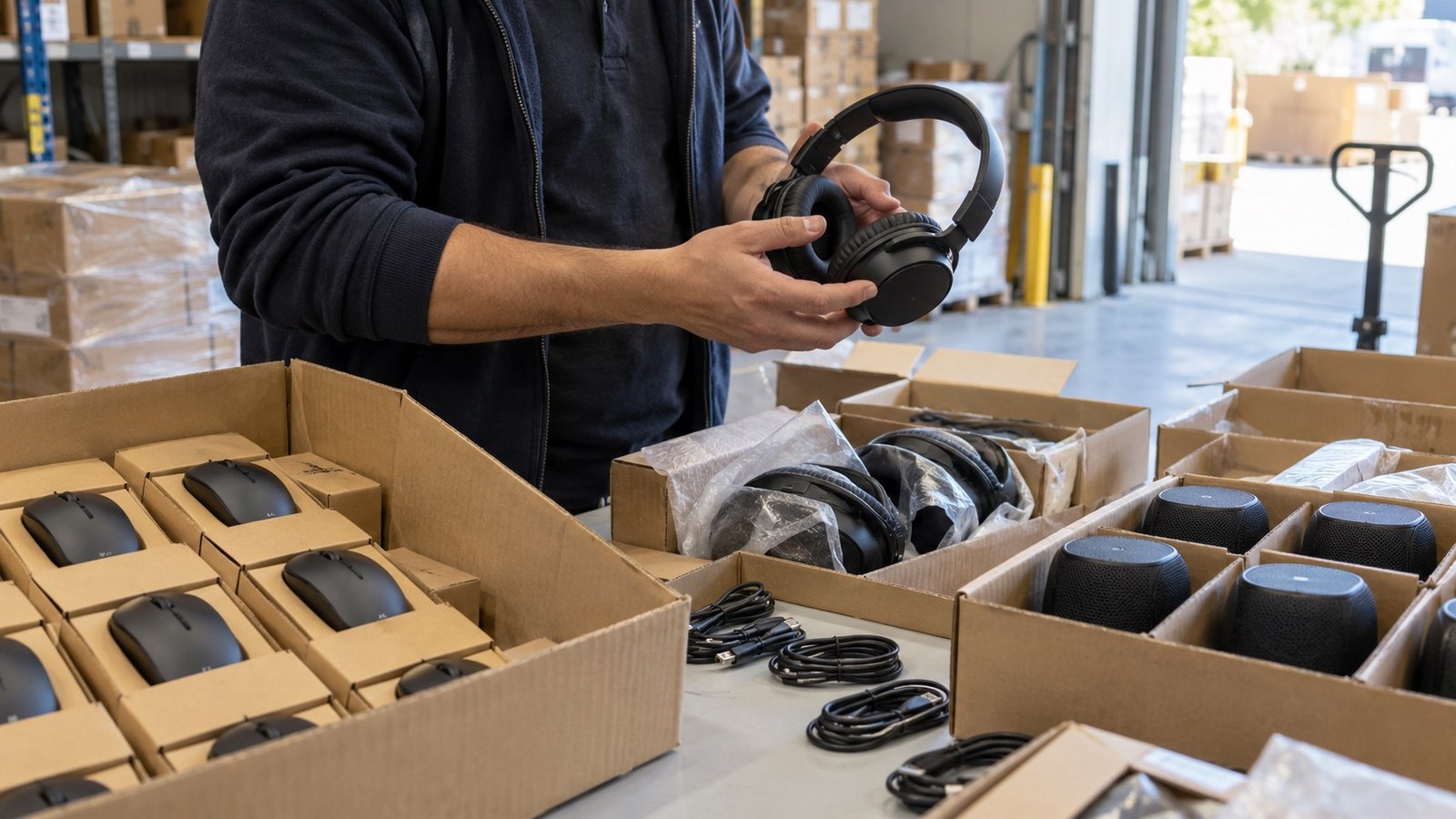
Buying wholesale electronics for resale starts with one question: what does “working” mean for this lot? A device that powers on may still have a faulty port, a weak battery or a missing accessory. Those details affect both the price you can ask and the time you spend preparing it.
This guide helps you compare electronics lots before ordering. Start with the Atlas electronics inventory, then check the model mix, testing information and delivery costs for the specific stock you want.
Understand what the lot actually contains
Electronics can mean televisions, computer accessories, audio equipment, lighting or a mixture of products. A pallet is a shipping unit, not a fixed item count. Ask for the number of devices, cartons and pallets separately.
A single-model order is usually simpler to photograph and list. A mixed electronics liquidation pallet can offer more variety, but it also requires more product knowledge and different test procedures. Choose an assortment your team has the equipment and time to handle.
Read the condition description carefully
- New overstock: surplus stock. Confirm packaging, accessories and whether a warranty applies.
- Open box: opened packaging. Ask what was checked and whether all original parts are included.
- Customer returns: returned merchandise with potentially different faults and cosmetic conditions.
- Refurbished: ask who carried out the work, what was replaced and what documentation is supplied.
- Untested: there is no confirmed functional result. Do not price your purchase as though every device works.
These descriptions do not replace a lot-specific agreement. Read the product condition guide and request a written summary of how this supplier graded the merchandise.
Ask what testing was performed
Useful testing information is specific. “Checked” tells you much less than “powered on, connected to a display and tested through each input.” Ask whether results apply to every item or only a sample.
- Confirm the exact model numbers and versions.
- Ask about power-on and relevant function tests.
- Check chargers, adapters, remote controls, cables and manuals.
- Ask about physical damage and packaging condition.
- Confirm account locks or management restrictions on connected devices.
- Ask how faulty units and shortages are handled.
For televisions, screen condition, stands and remotes matter. For mice, check connection type and the presence of a required receiver. For rechargeable audio products, ask about charging and battery condition. Use the manufacturer’s model documentation when planning tests; avoid unsafe improvised repairs.
Match product examples to your resale channel
The Atlas catalog includes a TCL 65-inch television lot, a wireless gaming mouse lot and a LED flashlight lot. These are examples of very different handling needs, not interchangeable purchases.
Large televisions need suitable storage and careful transport. Small accessories may be easier to ship individually, but compatibility questions and missing parts can create extra support work. Confirm current availability and final lot details before comparing them.
Use the manifest to plan your workload
Request the inventory list before ordering. A helpful electronics manifest identifies model, quantity and condition where available. Ask whether serial numbers and test results are included, and whether the list is exact or estimated.
The manifest reading guide explains how to approach the numbers. Listed retail value is not the same as expected resale revenue. Compare realistic completed sales for the exact model and condition in your chosen selling channel.
Calculate cost per sellable device
Add purchase cost, freight, handling, replacement accessories and testing supplies. Divide that total by the number of devices you reasonably expect to sell in the condition you intend to advertise.
For example, a hypothetical order costs $2,000, with $300 freight and $200 in preparation costs. If 80 of 100 devices are sellable, the cost is $2,500 ÷ 80, or $31.25 per sellable device. This is an illustration, not an Atlas quote or a forecast.
A $50 resale price would leave $18.75 before selling fees, outbound shipping, labor, returns and taxes. Your actual margin can be smaller. Keep a separate allowance for testing and troubleshooting rather than assuming your time is free.
Check recalls and plan for unusable stock
Before listing merchandise, check exact model identifiers against official recall information. The CPSC resale guidance is a useful starting point for resellers, and the CPSC recall database helps you look up affected products.
Set aside items you cannot sell safely or describe accurately. The EPA electronics recycling guide explains disposal options and notes that lithium-ion batteries and devices containing them do not belong in household garbage or recycling bins. Follow suitable local collection procedures.
Confirm freight, claims and payment terms
Ask where the lot ships from and whether the packed dimensions and weight are available. Tell the supplier if your delivery address needs a liftgate or appointment. Review wholesale shipping information, claim requirements and payment methods alongside your written quote.
Frequently asked questions
Are electronics pallets always tested?
No. Test status varies by listing and supplier. Ask for a description of the tests and whether every item was checked.
Does new overstock include a manufacturer warranty?
Do not assume it does. Confirm the applicable warranty terms and whether they transfer to your buyers.
Is a mixed electronics lot suitable for beginners?
A narrower assortment may be easier to evaluate. Mixed lots require a plan for different models, accessories and faults.
Can I sell returned electronics as new?
Describe the actual condition and follow your platform’s rules. A returned or opened item should not be labeled new merely because it appears unused.
Compare an electronics lot with a clear plan
Browse available wholesale electronics lots. Then contact Atlas Wholesale Group with the models or product types you want, your quantity, budget and delivery postcode. Ask for the information you need to price the stock honestly before ordering.