
Wholesale Beauty Inventory: A Buyer’s Guide
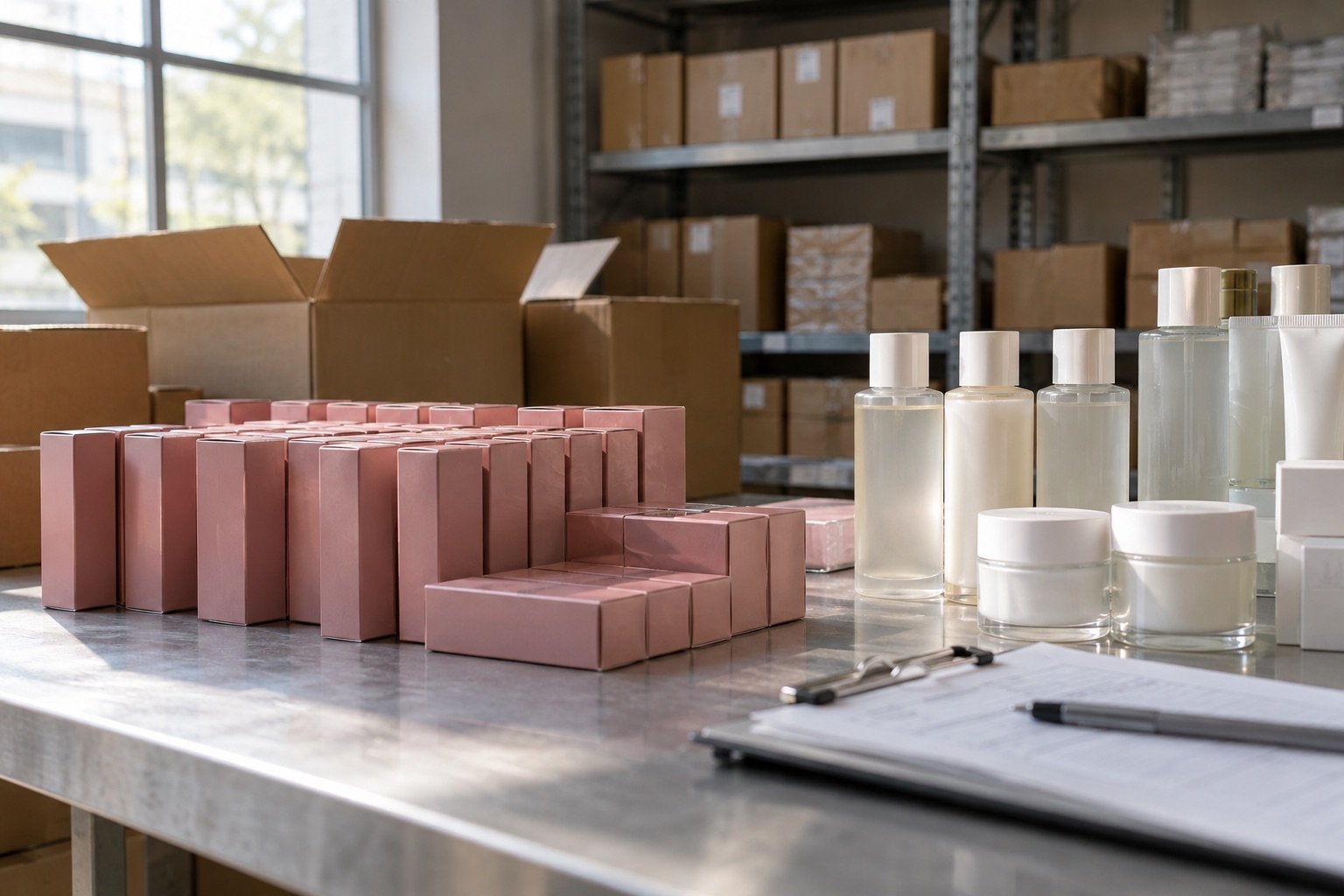
Evaluate wholesale beauty inventory by checking the exact product, packaging integrity, batch information, storage history and manufacturer guidance. A sealed box helps you assess condition, but a seal alone does not prove that a cosmetic is authentic, within its useful shelf life or suitable for resale.
This guide helps US retailers and resellers plan beauty stock checks without guessing product age. For a broader purchasing checklist, read the Atlas health and beauty buying guide.
Know which product you are buying
Record the brand, product name, shade or variant, size and package identifiers. Different sizes or shades can have different demand and listing requirements. A mixed lipstick lot needs a shade count; a single photograph of one shade does not establish the entire assortment.
Keep brand names accurate. A product appearing in a wholesale catalog does not, by itself, prove authorized distribution, manufacturer endorsement or permission to sell it on a particular marketplace. Ask for relevant sourcing documents and review your intended channel’s requirements.
Shelf life and expiration dates are different questions
The FDA’s cosmetic shelf-life guidance explains that US cosmetics generally do not have a required expiration-date label. Shelf life depends on the product, use and storage. Some personal-care products, including sunscreens, are drugs or both drugs and cosmetics, with different expiration requirements.
An absent date therefore does not tell you that an item is fresh or expired. Ask the manufacturer about the exact product and batch when the available information is unclear. Avoid assigning every cosmetic a generic three-year life or treating an unofficial batch-code calculator as a manufacturer’s confirmation.
Use a practical inspection sequence
- Identify the stock. Match package information to the invoice and manifest.
- Check packaging. Look for broken seals, leakage, damaged cartons and inconsistent labels.
- Record batch and date markings. Photograph them before stock is separated for sale.
- Ask about storage. Establish what the supplier knows about heat, moisture and handling.
- Resolve uncertainty. Seek manufacturer guidance for age or authenticity questions.
- Separate exceptions. Keep suspect or used items out of sale-ready stock while you investigate.
Do not open sale units merely to smell or sample them. Opening changes their condition. Visual inspection is useful for identifying concerns; it is not laboratory evidence of safety.
Read Atlas lipstick listings with the right distinctions
Atlas has a 1,000-unit boxed Fenty Beauty Mattemoiselle lipstick lot, listed at 0.06 oz per unit, and a 6,823-unit Maybelline Color Sensational lipstick lot described as sealed with assorted shades. “Boxed” and “sealed” describe different packaging details. Ask what packaging is present on the actual units rather than treating those words as interchangeable.
For either listing, request shade quantities, batch information, photographs and current stock details. The catalog titles do not establish a production date or shelf-life assurance. Confirm the quotation and any condition terms before ordering.
Plan stock rotation around documented information
When a product has a manufacturer-supported expiration date, organize stock so the earliest suitable expiry is considered first. For products without an expiry, keep receiving dates and batch records, and follow relevant manufacturer guidance. Do not create your own expiration date from the receiving date.
Keep cosmetics away from unsuitable heat, moisture and sunlight. FDA notes that storage conditions can affect cosmetic quality and safety in its shelf-life guidance. Your storage plan should fit the product instructions and the conditions in your stockroom.
Allow for shades that sell at different speeds
A low average unit cost can hide an assortment concentrated in shades your customers do not want. Ask for a shade-level count and consider how many units you can reasonably sell before placing a large order.
For example, a hypothetical $600 delivered lot of 500 lipsticks appears to cost $1.20 each. If only 400 units fit your sale plan, allocating that cost across them gives $1.50 per planned sale, before fees, packaging, labor and returns. This calculation illustrates assortment risk; it is not a prediction or an Atlas offer.
Related beauty products to investigate
Use these live Atlas listings as starting points for a product-specific inquiry. Confirm current quantities, packaging and condition before ordering. Brand names identify the advertised products; they do not establish that Atlas is an authorized distributor.
- Fenty Beauty Mattemoiselle lipstick: 1,000 boxed units, listed at 0.06 oz. Request the shade breakdown, batch markings and photographs of the actual packaging.
- Maybelline Color Sensational lipstick: 6,823 units, described as sealed with assorted shades. Ask how many units of each shade are included and what seal is present.
- Mixed health, beauty and personal care lot: 5,436 advertised items. Request a product-level manifest. Separate ordinary cosmetics from products with different regulatory requirements, and confirm packaging, sizes and batch details for each type.
Make a record for every product and shade
Create a stock sheet with the product name, shade, package size, quantity, batch identifier and receiving date. Add any manufacturer-confirmed date information and the location where the stock is stored. Preserve photographs of markings before cartons are divided.
Do not put an estimated manufacturing date into the same field as a confirmed date. If the supplier does not know the age, record it as unknown. An explicit uncertainty is more useful than a precise-looking number that cannot be traced to a source.
For mixed shipments, keep different batches separate when practical. If a concern arises later, that organization helps you identify the affected stock without assuming every item in the order has the same history.
Compare the shade assortment with your customers
A lipstick lot may be sealed and clearly identified but still poorly suited to your shop. Compare the supplied shade quantities with your own sales records. A long shade list does not tell you whether most units are concentrated in one color.
For online sales, consider the work needed to photograph and label each variant. Use the manufacturer’s exact shade name where confirmed and distinguish package sizes. Do not use an image of a full-size product to sell a smaller size without making the difference obvious.
When records are limited, choose a manageable quantity and track actual results. Keep clearance assumptions separate from ordinary selling prices. Your plan should account for stock you may hold longer, without promising that every shade will sell quickly.
Handle uncertain beauty stock consistently
Set up a separate area for products with damaged seals, inconsistent labels, leakage or unresolved identity questions. Record why each item was separated and who will resolve the issue. Do not return it to sale-ready stock simply because its outer carton looks attractive.
Ask for clarification through the supplier and, when relevant, the manufacturer. Retain written answers and compare them with the actual package. A general assurance about a brand is not the same as information about the batch you received.
Before delivery, review Atlas claim requirements and your written agreement. Photograph discrepancies promptly. This is an inventory-control process; a visual check alone cannot establish chemical stability or product authenticity.
Frequently asked questions about wholesale beauty stock
Is a boxed lipstick necessarily sealed?
No. A box and an intact seal are different packaging details. Ask what seal the product originally uses and what is present on the supplied stock. Describe only the condition you can verify.
Does every cosmetic need an expiration date in the United States?
FDA explains that cosmetics generally do not have a mandatory expiration-date label. Products regulated as drugs, or as both drugs and cosmetics, have different requirements. Check the exact product classification.
Can an online batch-code calculator confirm freshness?
Treat unofficial tools as leads rather than conclusive evidence. Codes can be interpreted incorrectly, and storage history also matters. Seek manufacturer information when the date or shelf life affects your purchasing decision.
Can I sell opened products as new because they look unused?
Do not describe an opened or used item as sealed new stock. Review your platform’s rules and relevant product requirements. Keep uncertain stock separate until its condition and suitability are resolved.
Does a wholesale invoice prove authorized distribution?
An invoice records a transaction. It does not necessarily establish authorization from the brand or satisfy every marketplace document requirement. Confirm the documents your selling channel needs before purchasing.
What is the most useful question to ask Atlas?
Send the product link and request the exact size, shade counts, batch markings, packaging condition and available sourcing documents. Add your planned quantity and sales channel so the inquiry addresses your actual needs.
Check alerts and publish accurate descriptions
Review the FDA recall and safety alert listings using the exact product and identifiers. Seek qualified regulatory advice if product classification, labeling or compliance remains unclear. This article is a buying workflow, not a substitute for product-specific review.
Describe the actual packaging, size and shade, and do not add unsupported claims such as “fresh stock,” “authorized” or a guaranteed shelf life. Explore Atlas health and beauty inventory. Contact Atlas Wholesale Group in Dallas, Texas, USA at admin@atlaswholesalegroup.com or call/WhatsApp +1 (214) 236-7711 to discuss the lot details you need.