
Wholesale Toy Lots: A Practical Buying Guide for Resellers
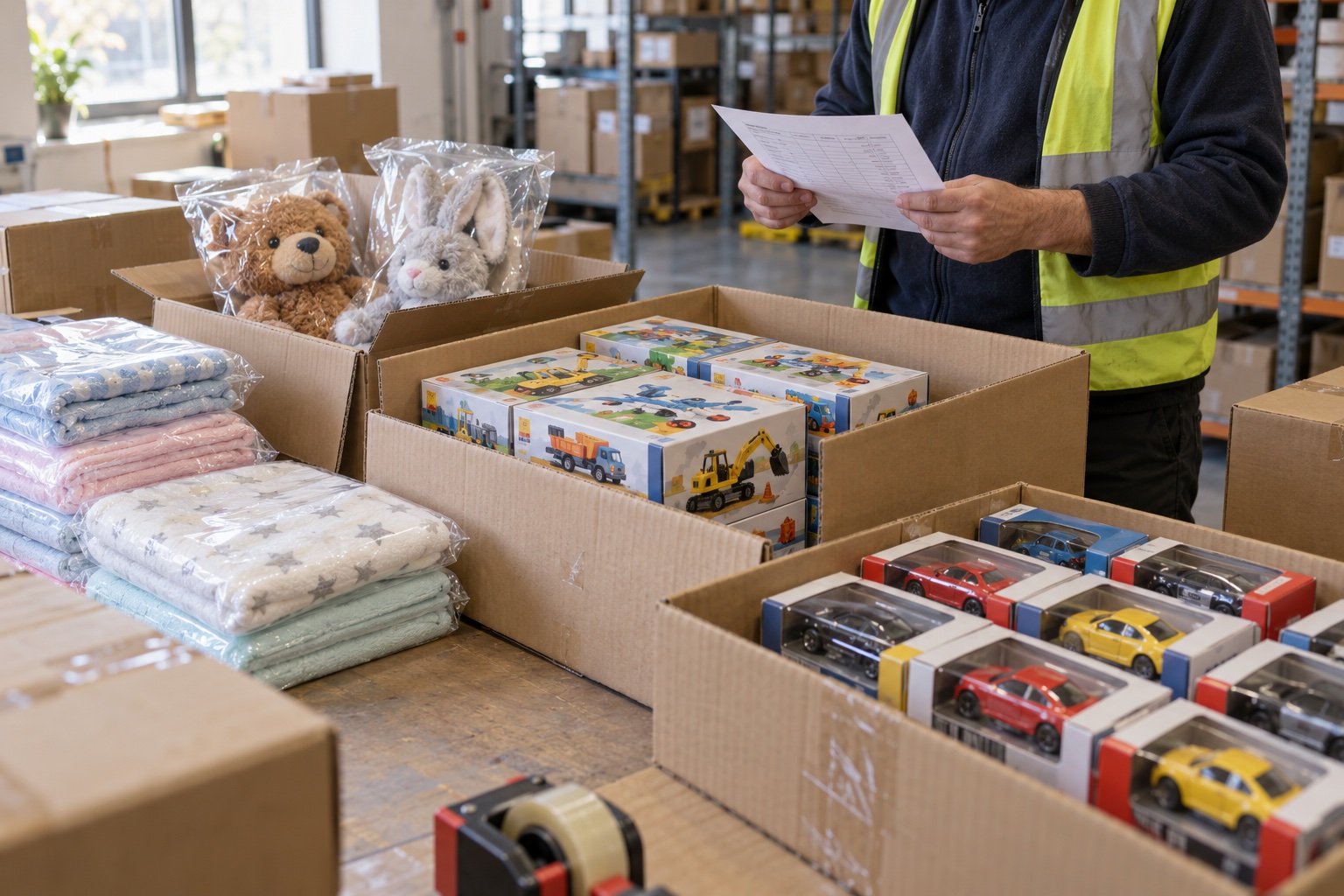
A low price on a toy pallet is only useful if you can turn the contents into complete, clearly described products that your customers want. Missing game pieces, unclear age labels, damaged packaging, and a slow-moving assortment can change the value of a lot quickly.
This guide explains how to compare wholesale toy lots and baby merchandise before placing an order. Start with the Atlas Toys & Baby inventory, then use the checks below to decide whether a particular lot fits your store, selling channel, and budget.
Choose the assortment around your customers
A toy shop, a flea market seller, and a baby boutique may all buy from the same category, but they need different stock. Decide what you can sell well before looking at the largest pallet or the deepest advertised discount.
- Toy sets: Compare the intended age range, number of pieces, packaging, and how much checking each set will need.
- Small toys and party items: Confirm whether the quantity refers to individual pieces, retail packs, or display cartons.
- Baby textiles: Check dimensions, materials, pack sizes, and the mix of colors or designs.
- Mixed lots: Ask how much of the shipment falls into each product type. A category name alone does not describe the assortment.
Think about your next few weeks of sales rather than assuming every item will sell during the holidays. A seasonal toy may need storage until the right buying period. That space has a cost, even if you already own the shelves.
Read the manifest in retail units
The useful question is not simply “How many pieces are on the pallet?” It is “How many complete retail units can I offer?” A construction set containing 100 parts is normally one retail unit. A carton containing 24 individually packaged toys may represent 24 units. Get that distinction in writing.
Use the Atlas manifest guide to review item counts and descriptions. Where available, ask for model numbers, UPCs, quantities by style, and photos of the actual packaging. Check whether the manifest is an exact count or an estimate, and whether substitutions are possible.
For a mixed toy liquidation pallet, also ask whether items are sealed, open-box, returns, or another condition. Read the condition guide and confirm the description of the specific lot. A general condition label is not a guarantee that every set has all its pieces.
Compare a few different lot formats
These Atlas listings show why the buying checklist changes with the product. Listing details and availability can change; confirm the current information before ordering.
- GI Joe toy construction sets: Ask about sealed packaging, included parts, and the manufacturer’s age guidance.
- Pull-back die-cast toy cars: Confirm the retail presentation, model assortment, and whether quoted quantities count individual cars or packs.
- Baby three-piece towel sets: Check that each retail set includes the listed pieces, along with readable material and care labels.
These examples are starting points for comparing merchandise, not a safety endorsement or a promise of resale profit. Assess the exact products you receive before listing them.
Check age labels, recalls, and product identity
Keep the manufacturer’s age guidance and warnings visible in your listings. Do not describe a toy as suitable for a younger child simply because it looks simple. Preserve identifying labels and instructions so buyers can understand what they are purchasing.
Before offering stock for sale, search the CPSC recall and product safety warning database using the brand and model details. Compare identifiers and photos, not just a similar product name. Repeat the check when preparing listings if time has passed since your purchase.
The CPSC reseller information center explains that resellers should examine inventory for safety and compliance. Keep recalled or questionable items out of sellable stock and follow the applicable recall instructions. Missing parts in durable infant products are not merely a discounting opportunity.
For online sales, review the CPSC online sellers’ safety guide and your marketplace’s documentation requirements. A supplier invoice, a safety document, and permission to sell a brand on a marketplace are different things. Ask about the records you need before committing to a lot.
Calculate the cost of sellable stock
Add the purchase price, freight, receiving labor, inspection time, and packing materials. Divide that total by a realistic number of complete, sellable retail units rather than the headline piece count.
Illustrative example: A lot costs $900, delivery costs $150, and inspection and packing cost $150. The total is $1,200. If 240 retail units are sellable after inspection, the cost is $5 per unit. If only 200 qualify, the cost rises to $6. These are hypothetical figures, not an Atlas quote or an expected result.
Then account for marketplace fees, outbound shipping, returns, and any discounts needed to clear slower styles. Compare realistic selling prices for the same product and condition. An original retail price does not tell you what an opened or damaged-box item will sell for today.
Plan delivery and inspection before ordering
Review the wholesale shipping information and confirm your delivery address, unloading arrangements, and any services included in the quote. Bulky packaging can take up more space than the merchandise itself.
Have a receiving area ready. Photograph the shipment and labels, reconcile quantities against the paperwork, and separate sealed stock from anything that needs closer review. Keep incomplete or questionable items apart from stock ready to sell. Follow the returns and claims process if you find a discrepancy, including any stated reporting deadlines.
Questions to ask before paying
- What exactly counts as one unit in this lot?
- Can I review the manifest and actual packaging photos?
- Which age ranges and product types make up the assortment?
- What is the condition, and are opened sets checked for completeness?
- Are model identifiers, warnings, and instructions present?
- What documents are available for my intended selling channel?
- What is the total delivered price, and how are discrepancies handled?
Check the buyer requirements and payment methods before placing your order. Clear answers at this stage make receiving and listing the stock easier.
Frequently asked questions
Are wholesale toy lots always brand new?
No. Wholesale lots can have different conditions. Read the specific listing, confirm packaging and completeness, and avoid treating every item in a mixed shipment as new.
Can I sell a toy without its original box?
That depends on the product, its condition, required labels and warnings, and your selling channel. An absent box does not settle the question. Confirm identification, completeness, and applicable requirements before listing it.
What should a first-time buyer start with?
Choose a manageable lot with a clear description and products you understand. Allow enough time and space to inspect it. A smaller assortment can be easier to price and track than a large mixed pallet.
Does buying in bulk guarantee a profit?
No. Profit depends on sellable quantities, demand, delivery costs, fees, and the prices you actually achieve. Work through the numbers before purchasing.
Find a lot that fits your store
Browse the current Toys & Baby wholesale lots and shortlist the products that match your customers. For availability, manifests, and delivery questions, contact Atlas Wholesale Group in Dallas, Texas, at +1 (214) 236-7711 or admin@atlaswholesalegroup.com.