
Wholesale Clothing Lots: A Practical Buying Guide for Resellers
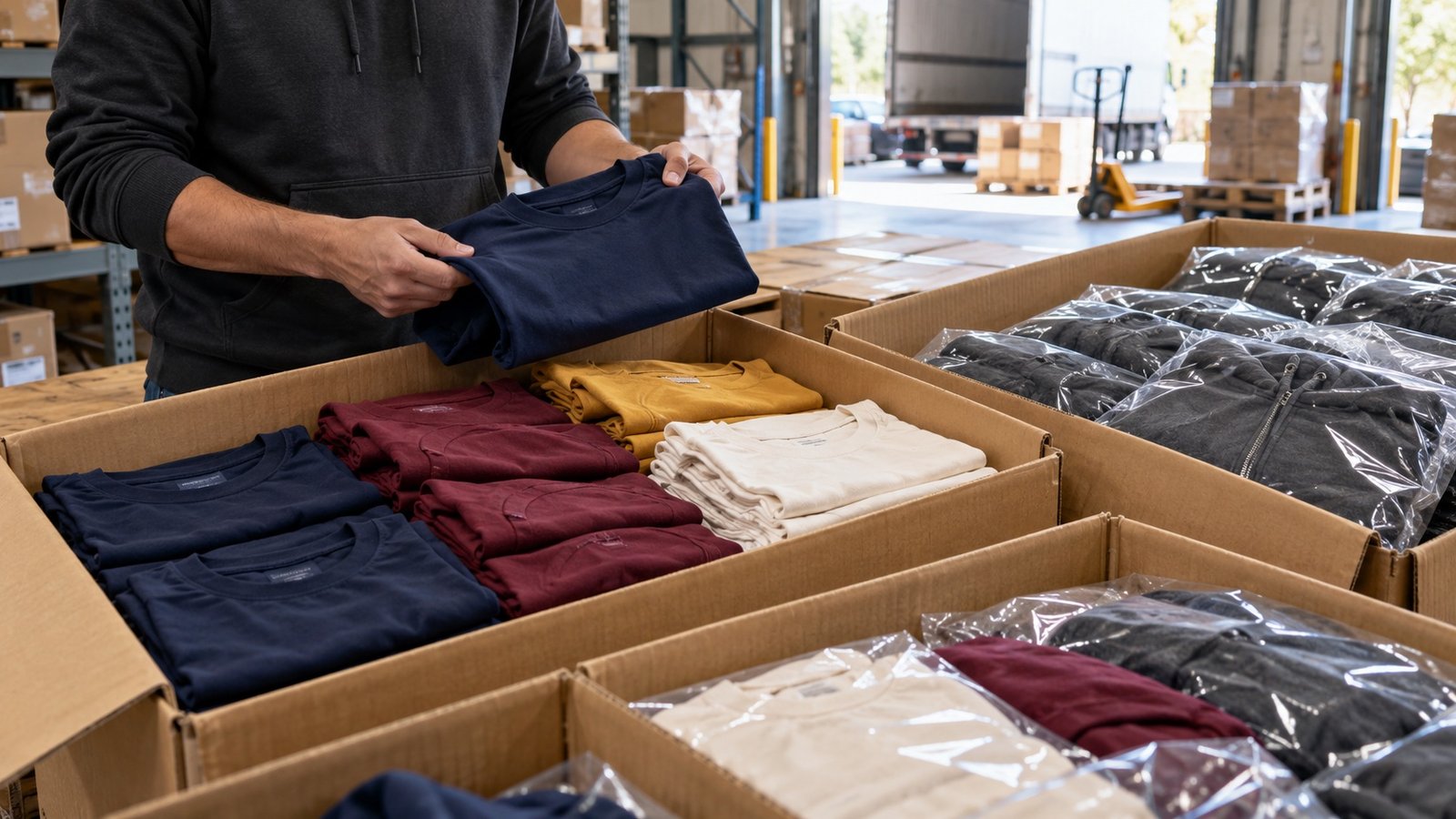
A cheap clothing lot can become an expensive purchase if the sizes, condition or freight costs do not fit your business. Before buying wholesale clothing for resale, work out what you can actually sell—and what each sellable item will cost once it reaches you.
This guide explains how to compare apparel lots, read a manifest and choose stock for your shop or online store. You can start with the Atlas Clothing & Apparel inventory, then use the checklist below to narrow your options.
What are wholesale clothing lots?
A wholesale clothing lot is a group of garments sold together. A lot may contain one type of item, such as cotton T-shirts, or a mix of styles and sizes. Some lots ship in cartons; others occupy one or more pallets. A pallet describes the shipping format, not a fixed number of garments.
Bulk clothing is also different from a regular replenishment order. A closeout may be available once, while a repeatable wholesale line may offer the same styles again. Ask about repeat availability before building your entire range around one lot.
Overstock, returns and irregular clothing: know the difference
- Overstock: surplus inventory. It may be unused, but packaging, tags and assortment still need checking.
- Shelf pulls: merchandise removed from retail display. Ask about stickers, missing tags and handling marks.
- Customer returns: previously returned items. Condition can vary, so allow time and budget for inspection.
- Irregulars: garments with manufacturing variations or defects. Confirm what “irregular” means for the particular lot.
- Mixed liquidation: an assortment that may combine conditions. Do not assume every piece is ready to list.
Supplier descriptions can differ. Request a written condition summary and use the Atlas condition guide as a starting point for questions.
Choose clothing your customers already buy
Start with your own sales records. If plain tees sell steadily and formal dresses move slowly, a lower-priced dress lot may still tie up more cash than a T-shirt order. Check the size range as carefully as the style. A lot described as S–3XL does not necessarily contain equal numbers of every size.
Bulk T-shirts and everyday basics
Plain cotton tees can suit discount shops, market stalls and some printing businesses. If you plan to print or embroider them, check fabric, seams, color consistency and whether irregular garments meet your quality requirements. One example in the Atlas catalog is a Gildan color T-shirt lot described as slightly irregular. Read the current lot details rather than treating the product name as a quality guarantee.
Hoodies and sweatshirts
Consider local weather and how long it takes you to receive, inspect and list stock. Check fleece weight, size distribution and the mix of printed versus plain garments. Compare the assorted printed hoodie lot with the Gildan pullover sweatshirt lot to see how different assortments may serve different buyers.
Women’s clothing and boutique stock
Style consistency matters when shoppers expect a particular look. Ask for representative photos, size counts and a breakdown of cuts or colors. A boutique daytime dress lot may suit a different selling channel from mixed basics. Catalog examples are included for comparison; availability and final terms must be confirmed.
Read the manifest before comparing prices
A manifest is an inventory list for the lot. Depending on the supplier, it may include item descriptions, quantities, sizes, brands, identifiers and estimated retail values. It is useful, but it is not automatically a promise that every item is undamaged or that every listed retail price is achievable.
Ask whether the manifest is exact or estimated, when it was prepared, and how shortages are handled. For unmanifested apparel, request enough detail to understand what is unknown. See how to read a manifest before committing to a large assortment.
- Confirm garment count, carton count and pallet count separately.
- Check the size and style mix against your customers.
- Clarify tags, packaging, defects and condition grading.
- Ask whether photos show the exact lot or sample merchandise.
- Get the shipping origin, packed dimensions and freight quote.
- Read the claim window and what evidence a claim needs.
If you use product identifiers to match a manifest to your online listings, check the actual garment or packaging rather than guessing from a product name. The GS1 US guide to UPC barcodes explains the basics of product identification. When reselling an existing branded product, ask for its supplied identifier; do not assume it needs a new barcode.
Calculate cost per sellable garment
The advertised unit price is only one part of your cost. Add freight, handling and any preparation costs, then divide by the number of pieces you reasonably expect to sell.
Cost per sellable garment = total landed and preparation cost ÷ expected sellable garments.
Here is an illustrative calculation, not an Atlas quote:
- Lot purchase: $1,200 for 600 garments.
- Freight and handling: $300.
- Preparation supplies: $100.
- Total cost: $1,600.
- Expected sellable quantity: 540 garments.
That works out to about $2.96 per sellable garment, rather than the $2 purchase price per piece. At a $10 selling price, there would be about $7.04 left before marketplace fees, outbound shipping, labor, storage, returns and taxes. That is not net profit. If fewer pieces sell, the effective cost rises.
Compare suppliers using the same assumptions. A lower purchase price can lose its advantage if freight is higher or a larger share of the lot needs repair.
Questions to ask a wholesale clothing supplier
A useful quote answers practical questions, not just “How much?” Send the supplier your preferred garment types, quantities, sizes, condition requirements and delivery location.
- What is the minimum order for this specific lot?
- Is the listed price per piece, carton, pallet or complete lot?
- Is the manifest available, and are the quantities verified?
- What documentation is available for branded merchandise?
- Where does the stock ship from, and what is the estimated dispatch time?
- Does delivery require a loading dock, liftgate or appointment?
- What are the payment, cancellation and shortage-claim terms?
Atlas is based in Dallas, Texas, USA, but the shipping origin for an individual lot should be confirmed. Review wholesale shipping information and the returns and claims policy alongside your written quote.
Before placing an order, review the Atlas buyer requirements and available payment methods so you know what information and payment arrangements to confirm.
A sensible first order
Choose a lot you can store, inspect and list without stretching your cash flow. Reserve time for sorting by size and condition. Track what sells, how long it takes and what buyers return. Those records will tell you more about your next order than the headline retail value of a pallet.
Once stock arrives, count it promptly and photograph the packaging before discarding it. Keep the manifest and delivery paperwork together. If there is a discrepancy, follow the supplier’s claim process within the stated window.
Check garment labels before listing
While sorting stock, check that garment labels are present and readable. For U.S. resale, the FTC guide to textile and wool labeling is a useful official reference for fiber content, country of origin and business identification. Use it to check the requirements relevant to the garments you plan to sell, especially if labels are missing or you intend to change them.
Frequently asked questions
How many pieces come in a clothing pallet?
There is no standard count. Garment weight, packaging and pallet dimensions affect capacity. Confirm the actual piece count for the lot you are considering.
Is overstock clothing always new with tags?
No. Overstock describes the inventory source, but tags and packaging can vary. Ask the supplier to confirm those details in writing.
Can I buy wholesale clothing to sell online?
Yes, if the inventory fits your selling channel and its rules. Check brand restrictions, documentation, condition requirements and the cost of photographing and listing each item.
Should a beginner choose a mixed clothing lot?
A narrower assortment can be easier to evaluate and list. A mixed lot may offer variety, but it can also require more sorting and knowledge of different garment types. Start with what you understand and can sell.
Does a low wholesale price guarantee a good margin?
No. Your result depends on sellable quantity, demand, fees, freight, labor and how quickly the stock moves. Use a conservative landed-cost calculation before ordering.
Find a clothing lot that fits your business
Browse available wholesale clothing and apparel lots. For help comparing options, contact Atlas Wholesale Group with your garment preferences, quantity, budget and delivery postcode.
Phone: +1 (214) 236-7711 · WhatsApp · admin@atlaswholesalegroup.com